 AI-First
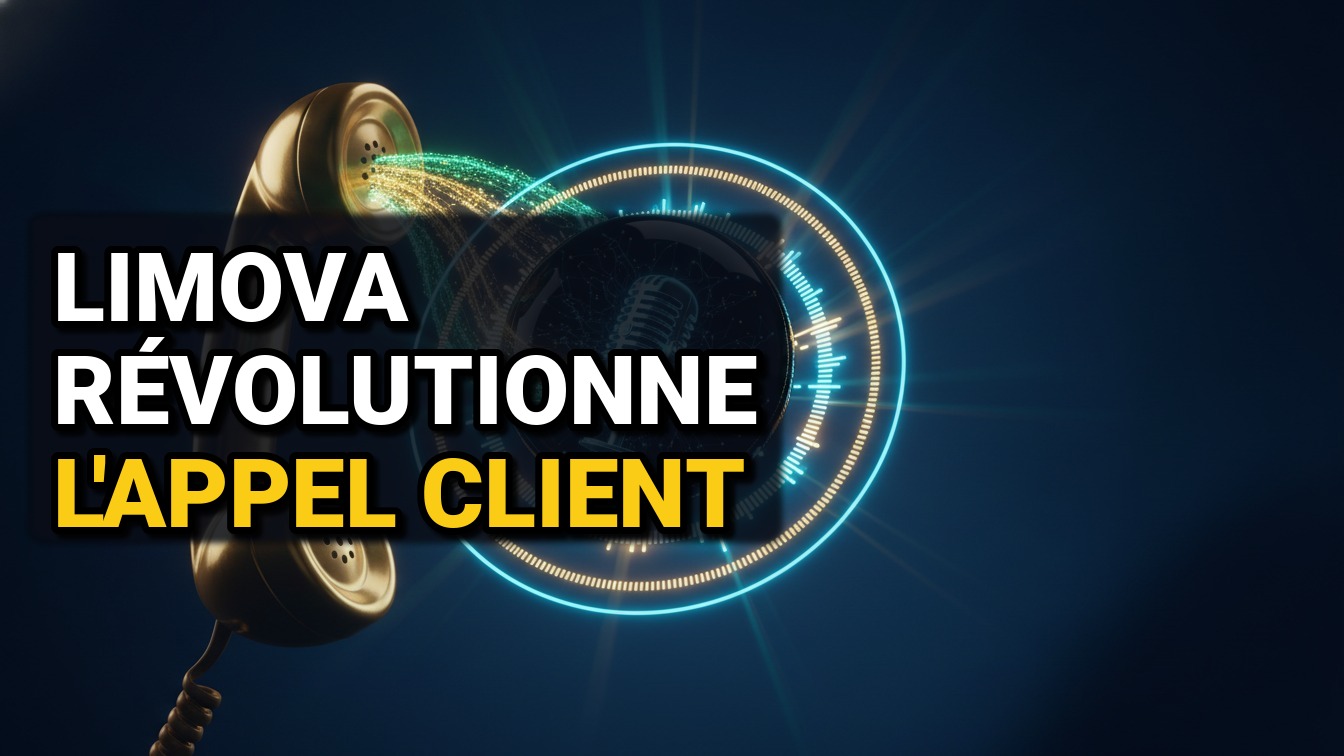
Limova AI is a French platform launched in 2024 by Nice-based startup Kainotomia: 9 specialized AI agents bundled into a single subscription, including a phone receptionist (Tom), a web chatbot, a WhatsApp assistant (Charly+), and six agents covering marketing, prospecting, SEO, HR, accounting, and legal. The Essentiel plan starts at €69.90/month excl. tax; the Pro plan (with telephony) at €119.90/month excl. tax.
A significant chunk of working hours in SMBs goes to repetitive calls: business hours, pricing, availability, order tracking. Limova claims to solve this problem with a no-code platform that handles calls, chats, and outreach, all without any technical expertise. The promise is compelling, especially when you see a 4.9/5 rating on Trustpilot with over 900 verified reviews.
I spent time dissecting what Limova offers, how the platform works, and most importantly what it doesn't tell you in its demos. Here's what I took away.
- 🎯 Generalist platform: 9 AI agents covering telephony, marketing, SEO, accounting, and legal.
- ⚡ Fast deployment: no-code setup with a built-in helper that walks you through configuration.
- ⚠️ Hidden limits: Tom charges €0.20/min on top of the subscription, complex sales cycles are poorly covered, no real-time prosody.
- 📊 Field verdict: solid for SMBs with simple call flows, not enough for advanced technical support.
What Limova actually offers
In short: Limova is a no-code platform founded in 2024 by Kainotomia (Nice). It deploys 9 pre-configured AI agents with no technical skills required, claims over 10,000 active customers, and covers telephony, chatbot, marketing, prospecting, SEO, HR, accounting, and legal in a single subscription.
Limova positions itself as "Europe's number one solution" for helping businesses with AI agents. That's a bold claim, and it deserves a closer look. The platform bundles 9 specialized agents: Tom (telephony and customer relations), John (marketing and social media), Lou (SEO), Elio (sales prospecting), Charly+ (general WhatsApp assistant), Rony (recruiting), Julia (legal), Manue (accounting), and a ninth support agent. Each agent comes with "super powers," pre-configured execution features you can activate without writing a single line of code.
According to Formalive, the platform has been featured on BFM and is used by companies like AXA and Comptacom. The "big names validate us" positioning is a classic move in French SaaS marketing, but it does signal a minimum level of maturity.
How does the Tom phone agent work?
Tom is the agent that matters most to SMBs dealing with a steady flow of inbound calls. The setup is straightforward: you assign a phone number, pick a language and voice type (male, female, energetic, calm, empathetic), write behavior instructions, and add a knowledge base. Tom can then answer calls 24/7, qualify the caller, provide basic information, and transfer to a human when the request falls outside its scope.
In the Limova 2.0 demo (the major release launched in late 2024 that consolidates all agents into a unified admin dashboard), the founder shows that every call generates a summary viewable in a dashboard, complete with the full audio for playback. This is the feature that makes the difference for a business owner: the ability to stay in control of what the AI says to customers and to course-correct quickly if something goes wrong.
The built-in helper (also named Tom, which is confusing) guides you through writing instructions in a "funnel" format: it asks the right questions to structure your brief. This is a smart design choice for non-technical users, because 80% of a voice agent's quality comes down to its initial instructions.
The chatbot and WhatsApp: the real value multiplier
The voice agent grabs the attention, but I'm convinced that the web chatbot and WhatsApp assistant are the real wins for an SMB. The reason is simple: a chatbot on your website or WhatsApp handles a far larger volume of requests than phone calls, at near-zero marginal cost per interaction.
Limova's tutorial video walks through the process: you create a customer support agent, give it a name and avatar, write its instructions (with the helper's assistance), upload your documentation (brochures, processes, pricing, policies), and set the threshold for human handoff. The chatbot doesn't "close" the conversation: it displays a message like "I can't go further, call this number or fill out this form."
Why does the chatbot create more value than the voice agent?
A real estate agent, a property management company, a car dealership, a law firm: the Limova video cites these examples to show that the chatbot makes sense in almost every industry. The key is the document library. A property manager who uploads their building regulations gets an agent capable of answering the vast majority of residents' questions without human intervention.
The WhatsApp integration via Charly+ goes even further. From WhatsApp, you can ask the assistant to send emails, create Google Calendar events with a Meet link, analyze your emails for the day, or automatically file incoming invoices in the right folder. In the demo, the founder sends a voice message on WhatsApp asking to schedule a meeting for the next day with the whole team. Within seconds, the email is sent, the Calendar invite is created, and every team member has received the link. If you've already read my article on AI agents for business, you'll recognize the practical application of the principle "AI should read, decide, act, and report back."
Integrations: the catalog that sets it apart
An AI agent platform that isn't connected to your existing tools is just a gadget. I say this often: the real value isn't in the model, it's in the integration with your business processes. Limova understood this and offers a substantial integration catalog.
Which tools connect to Limova?
The list covers the main building blocks of an SMB: social media (LinkedIn, Instagram, Facebook), Google suite (Calendar, Contacts, Gmail, Drive, Analytics), Microsoft suite (Outlook, Teams, SharePoint, Drive), CRM (HubSpot, Salesforce, Pipedrive), accounting (Pennylane, Sage, Odoo), communication (Slack, AirCall), e-commerce (Shopify, Wix, WordPress), and others like Notion, Linear, Fireflies, or Clavijo.
According to Gartner, the intelligent virtual assistant market is expected to reach $14.7 billion by 2027, driven by SMB demand for solutions integrated with their existing tools. Limova is positioned right on that wave.
The important point: these integrations let each team member connect their own accounts (their Gmail, their Instagram, their HubSpot). The platform supports multiple workspaces to separate activities or departments within a company. A business owner can manage a "Marketing" workspace and a "Sales" workspace with different team members, separate knowledge bases, and integrations specific to each department.
This is the granularity you lose when every team member uses ChatGPT Pro in their own silo. With Limova, the business owner retains control over shared documentation, conversations, and active integrations. According to Comparateur-IA, this is one of the platform's strongest arguments for teams.
| Feature | Limova | ChatGPT Team | Specialized voice solution |
|---|---|---|---|
| Voice agents (phone) | ✅ Tom agent, multilingual | ❌ No telephony | ✅ Core offering |
| Web/WhatsApp chatbot | ✅ Built-in deployment | ❌ API only | ⚠️ Depends on vendor |
| Content creation (posts, SEO) | ✅ John + Lou | ✅ Via manual prompts | ❌ Out of scope |
| CRM/accounting integrations | ✅ 30+ connectors | ⚠️ Via limited plugins | ❌ or very partial |
| Owner control (workspaces) | ✅ Multi-workspace, roles | ⚠️ Basic admin | ❌ Often single-purpose |
| Real-time emotional analysis | ❌ Post-mortem text only | ❌ Not available | ✅ (Vocalis, etc.) |
SOURCE: respective vendor websites · Updated 05/2026
Limova vs. specialized voice solutions
The choice between a generalist platform like Limova and a specialized voice solution like Vocalis comes down to a single criterion: the complexity of your phone interactions.
Should you go generalist or voice specialist?
According to a comparison published by Vocalis in 2025, Limova's agents are limited to "post-mortem" text-based sentiment analysis, whereas Vocalis adapts its prosody in real time to calm an irritated customer or engage a lukewarm prospect. Vocalis claims 380 ms latency on Swiss GPU H100 infrastructure, with nLPD compliance (Switzerland's equivalent of GDPR). These are solid technical arguments for businesses where the phone is the primary channel (call centers, emergency services, complex technical support).
Limova plays on a different field. Its advantage isn't vocal sophistication, it's the platform effect: a single subscription covers telephony, chatbot, marketing, SEO, prospecting, accounting, and legal. For an SMB of 10 to 50 people receiving 20 to 100 calls per day on simple topics (business hours, availability, appointment booking), Limova gets the job done. For a call center handling 500 daily calls with emotional escalation, it falls short.
I often compare this logic to what I describe in my article on autonomous AI agents: a high-performing agent is one that correctly executes specific tasks within a defined scope. Not one that tries to do everything.
The limitations nobody mentions
Online reviews of Limova are overwhelmingly positive (4.9/5 on Trustpilot with over 900 verified reviews, 4.6/5 on Comparateur-IA). But several points need to be raised before you sign up.
What are the real blockers for an SMB?
The total cost is higher than the listed subscription. The Limova pricing page lists three plans: Essentiel at €69.90/month excl. tax (8 agents, no telephony), Pro at €119.90/month excl. tax (Tom + Charly+ + 10,000 simultaneous calls in 140 languages), and Business+ on request. The crucial detail: Tom charges €0.20 per minute of call time on top of the subscription. On 500 calls averaging 3 minutes per month, that's an extra €300 to factor into your ROI calculation. The 7-day free trial does not require a credit card.
Complex sales cycles are poorly covered. Comparateur-IA notes that Limova is "less suited to large enterprises with long sales cycles" and "complex sales requiring human consultation." If your sales process involves weeks of technical back-and-forth, the Elio agent won't replace a senior sales rep.
Quality depends entirely on configuration. The demo shows a polished result, but the founder himself stresses the importance of the helper for "prompting your AI correctly." A poorly configured voice agent won't save you time: it will lose you customers. This is exactly what I see with my SMB clients when they deploy agents without first mapping their processes.
No transparency on the underlying models. Limova doesn't disclose which LLM it uses (GPT-4, Claude, proprietary model?). For a business concerned about data privacy or data sovereignty, this opacity raises questions.
"A poorly configured voice agent doesn't save you time. It loses you customers."
Vincent, May 2026
My verdict: who Limova is right for (and who should pass)
Limova does one thing well: making a full AI automation layer accessible to non-technical SMBs. The "9 agents in a single platform" approach with a built-in helper, centralized knowledge base, and ready-made integrations matches exactly what a business owner needs when they want to test AI without launching an 18-month transformation project.
I recommend Limova if you're an SMB of 5 to 100 people, your customer requests are repetitive and documentable, you want an AI phone receptionist + chatbot + content creation in a single tool, and your budget can absorb a Pro subscription at €119.90/month excl. tax plus per-minute call charges at €0.20.
I don't recommend Limova if your calls require nuanced emotional handling (go with Vocalis or a specialist), if you need transparency on the AI model being used, or if your sales cycle exceeds 30 days with deep technical exchanges.
My advice: start with the 7-day free trial, configure only the Tom agent on a secondary number, and measure the human handoff rate after 50 calls. If that rate is below 30%, you have a solid use case. Above 60%, your requests are too complex for a generalist agent. This is the test I recommend to every client before investing in an AI automation solution.
Frequently asked questions
Is Limova suitable for very small businesses (fewer than 5 people)?
Yes, the platform explicitly targets freelancers and micro-businesses. The Tom agent can replace an expensive phone receptionist, and the WhatsApp chatbot via Charly+ acts as a versatile personal assistant. The main barrier is cost: the Pro plan runs €119.90/month excl. tax, plus €0.20/minute for Tom's call time. At low volumes, the math may not work out. Try the 7-day free trial on a specific use case before committing.
Can you use Limova only for telephony without the other agents?
The Essentiel plan (€69.90/month excl. tax) covers the 8 non-telephony agents. To use Tom, you need the Pro plan (€119.90/month excl. tax), which also includes Charly+ and the WhatsApp chatbot. There is no "Tom only" plan at this time. If telephony is your sole need, compare with specialized solutions like Vocalis or Air AI, which offer per-minute pricing without a platform subscription.
What's the difference between Limova and a simple chatbot like Intercom or Drift?
Intercom and Drift are online chat tools with routing rules. Limova goes further with agents that execute complete tasks: publishing on social media, sending emails, creating Calendar events, filing invoices. The telephony layer is also a major differentiator that Intercom doesn't offer natively. That said, Intercom is more mature for pure customer support, with ticket history, SLAs, and advanced helpdesk integrations.
Is customer data processed by Limova secure?
Limova doesn't provide detailed information about its security architecture or server locations. The Vocalis comparison (2025) notes that Limova doesn't hold nLPD (Swiss data protection) compliance, which makes sense for a French platform. For European GDPR, check directly with Limova about data processing agreements and storage before entrusting it with sensitive data (contracts, invoices, medical records).
How long does it take to set up a working voice agent?
According to Limova's official tutorials, initial configuration of a Tom agent takes between 30 minutes and 2 hours depending on the complexity of your business. The bulk of the work is writing the instructions and building the knowledge base. The built-in helper speeds up the process, but the quality of the result depends on the precision of your answers. Plan for a week of testing and adjustments before putting the agent live on your main number.
Vidéos YouTube
- Create a phone operator with Tom on Limova · Tutorial · Limova
- Créer un chatbot IA avec Tom pour votre site internet ou WhatsApp · Tutoriel Limova · Limova
- LIMOVA 2.0 : La Solution IA Tout-en-Un pour les Entreprises · Limova
Articles & ressources
- Limova.ai - Assistants IA pour automatiser votre entreprise · limova.ai
- Offres et tarifs Limova · limova.ai
- Avis Limova AI 2026 : Que Valent ces Agents IA pour Automatiser votre Business ? · formalive.fr
- Agents IA Autonomes · Découvrez les 8 agents Limova · limova.fr
- Vocalis vs Limova : Infrastructure Voice Suisse vs 9 Agents · vocalis.pro
- Avis Limova AI (2026) · Test complet, points forts, limites, prix · comparateur-ia.com
- Avis Limova AI 2026 : test, agents, prix et code promo · lagent-ia.fr